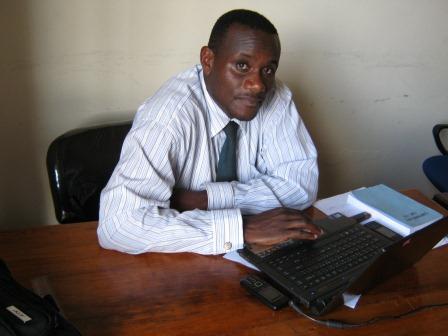
It gives me great pleasure to write this message to you at this time of the year when
“Microfinance” is often defined as financial services for poor and low-income clients. In practice, the term is often used more narrowly to refer to loans and other services from providers that identify themselves as “microfinance institutions” (MFIs). These methods include group lending and liability, pre-loan savings requirements, gradually increasing loan sizes, and an implicit guarantee of ready access to future loans if present loans are repaid fully and promptly.
More broadly, microfinance refers to a movement that envisions a world in which low-income households have permanent access to a range of high quality financial services to finance their income-producing activities, build assets, stabilize consumption, and protect against risks. These services are not limited to credit, but include savings, insurance, and money transfers.
Community Microfinance serves the rural poor or low-income people especially the youth, women, old age and the disabled that do not have access to formal financial institutions.
Most of our clients are usually self-employed, household-based entrepreneurs. Their diverse “microenterprises” include small retail shops, street vending, metal fabrication, wood work, vegetable farming, livestock, market vending, and service provision.
Financial services in Uganda
According to the Fin-scope report 2009, 70% of Uganda’s population of over 30 million does not have bank accounts. It is our quest to help the rural poor and others that have no access to financial services. It is a known fact that many people in the villages keep money with them under the beds, in small boxes, some even dig pits in their bedrooms and put plastic cans and use those as safe deposit boxes.
Community microfinance calls on all those concern parties to join in the struggle to give everyone an opportunity to access financial services.
|